
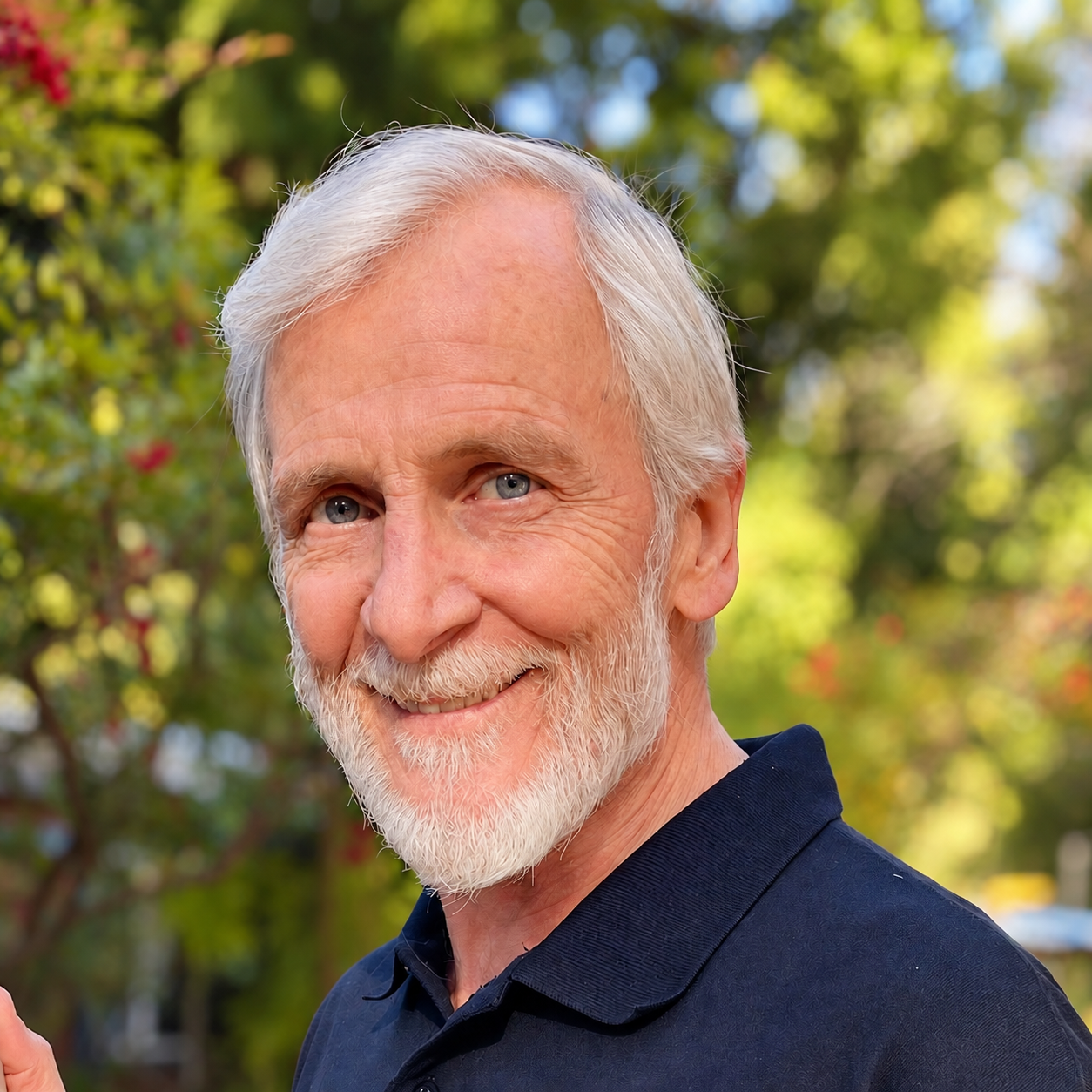
McFinn Lovere’s ALS Story
A Rare ALS Reversal and the Power of Hope
McFinn Lovere reflects on his ALS diagnosis, profound loss of mobility, unexpected recovery, advocacy, and why hope remains central to his journey.
McFinn Lovere’s Story
I grew up in St. Louis, Missouri, in a family that had already witnessed extraordinary survival. When I was two years old, my older sister and I both had polio. She was placed in an iron lung, and my mother was warned that she might not live through the night. My mother went home and prayed. My sister survived and lived to be 78. That experience became part of the spiritual foundation that would later shape how I faced my own illness.
At 18, I left St. Louis and headed toward Australia, but I stopped in Hawaii and stayed. At 19, I entered a monastery. When I later refused induction during the Vietnam War, a federal judge sentenced me to social service. I worked at a Missouri state mental institution, then promised the judge that if he released me, I would spend the rest of my life serving others. I tried to keep that promise. I eventually helped start Valley Hospice in Northern California and spent 18 years working in hospice care.
Years later, I became the person confronting a life-limiting diagnosis.
In September 2005, I was building a house when I began struggling with tasks that should have been simple. One day I tried to lift a large trash bag and could not. My doctor referred me to a neurologist, but it took months to get an appointment. While on vacation in Mexico, I fell flat on my face. By December 23, I was in a wheelchair. On January 3, 2006, a neurologist told me I had ALS and might have less than 18 months to live. A second evaluation at the University of California, San Francisco confirmed the diagnosis.
My daughter was with me when I received the first diagnosis. As she wheeled me out, I told her not to believe the prediction. I appreciated that the physicians told me what they believed to be true, but hearing that there was no hope left me counting days and months. I decided that if the medical team could not give me hope, I would have to create it for myself.
My physical decline was rapid. I eventually lost nearly all movement except in my head and two fingers. I needed help eating, bathing, dressing, getting in and out of bed, and completing the most personal parts of daily life. My wife, Mona, and other caregivers carried an enormous responsibility. I learned that when one person has ALS, the entire family lives with it.
I was not calm or optimistic every day. I was frightened, angry, and sometimes impossible to be around. I pushed away people who came to help. Eventually I recognized that my anger was terrifying the people I loved. I began asking not only what was happening to me, but what my family needed from me. Even when I could not care for myself physically, I could still try to bring steadiness, gratitude, and love into our home.
I also gave myself permission to be honest. I cried often. Sometimes I rolled my wheelchair in front of a full-length mirror and let myself cry until I was ready to speak kindly to the person looking back at me. I called that person “McFinn Within.” Each morning I would say, “Good morning, McFinn,” close my eyes, and tell the person inside that we were going to make the day as good as we could.
Friends encouraged me to see a naturopathic physician. Testing showed heavy-metal exposure and other health concerns, and I pursued chelation, nutrition, supplements, cannabis for appetite and relaxation, and other approaches. I had been exposed to lead earlier in life, but I cannot say that lead caused my ALS or that any single treatment reversed it. These were personal choices made during a desperate time, and they should not be taken as medical advice or as a treatment plan for anyone else.
My recovery did not arrive as a simple, predictable medical progression. During a prayer gathering at our home, I unexpectedly stood and walked around my wheelchair, only to lose that ability minutes later. On another occasion, during a spiritual healing, I briefly regained movement and took several steps before it disappeared again. Those moments were confusing and overwhelming, but they gave me a glimpse of possibility.
About a month later, a caregiver was helping me practice standing and walking when my arm moved. Soon afterward, physical therapists placed my curled hands on springs and asked me to pull. At first I could barely make them shake. A craniosacral therapist asked me to lie on the floor and “squirm” for 45 minutes every day, using whatever movement remained in my head, neck, and fingers. I put a chair across the room and told myself that one day I would reach it.
Eventually, I did.
The progress was painstaking. I moved from the floor to crutches, then to a cane, and finally to walking independently. Rebuilding my body took roughly a year and a half. I do not know precisely why my course changed or what happened within my nerves and muscles. I only know that movement slowly returned and that I kept doing the work in front of me.
My wife was one of my greatest motivations. If an exercise might help me, it could also lessen what she was being asked to carry. Hope did not mean pretending that everything was fine. It meant having a reason to try the next movement, accept the next act of care, and meet another day.
Years later, neurologist Dr. Richard Bedlack documented me as the 42nd ALS reversal in his work studying rare people whose disease course changed in unexpected ways. I understand how unusual my experience is. I do not share it to suggest that other people can reproduce my recovery by following the same steps, or that someone who continues to decline has failed to hope or work hard enough. ALS is different for every person, and most people will not have the outcome I did.
What I can share is what hope did for me before I knew whether I would recover. It helped me repair relationships, accept help, and remember that paralysis did not erase the person inside my body. It helped me recognize that a meaningful day could still contain conversation, kindness, humor, and love.
Today I serve people affected by ALS through advocacy and the Pathfinder community at EverythingALS. I know what 24-hour care, isolation, fear, and dependence can feel like. I also know how important it is to have a caregiver who sees the person rather than only the tasks of care. I want people with ALS and their families to know that they can reach toward community and that asking for help is not weakness.
It is heartbreaking to watch friends continue to lose function despite their courage and effort. I have cried with them and for them. I want researchers, physicians, and companies to keep working urgently toward effective treatments and a cure. In the meantime, I believe we can also address the loneliness, sadness, and loss of identity that often accompany disease.
My advice is to live one day at a time. If spirituality is meaningful to you, draw strength from it. If it is not, begin with the belief that you remain worthy of love, care, and dignity. Let the people around you show up. Remember that even when someone else is feeding, dressing, or lifting you, you can still care for them through your words, attention, and gratitude.
I am now 75 years old. My life is dedicated to Mona and to the ALS community. My business card carries a simple message: “Never give up hope. But if you do, email me.” That is the work I want to continue—meeting people in isolation and reminding them that they are more than ALS.
I cannot offer a formula for what happened to me. I can offer my presence, my experience, and my belief that no person should be reduced to a diagnosis or a prognosis. Every person is still here, still worthy, and still capable of giving and receiving love. That is where hope begins.